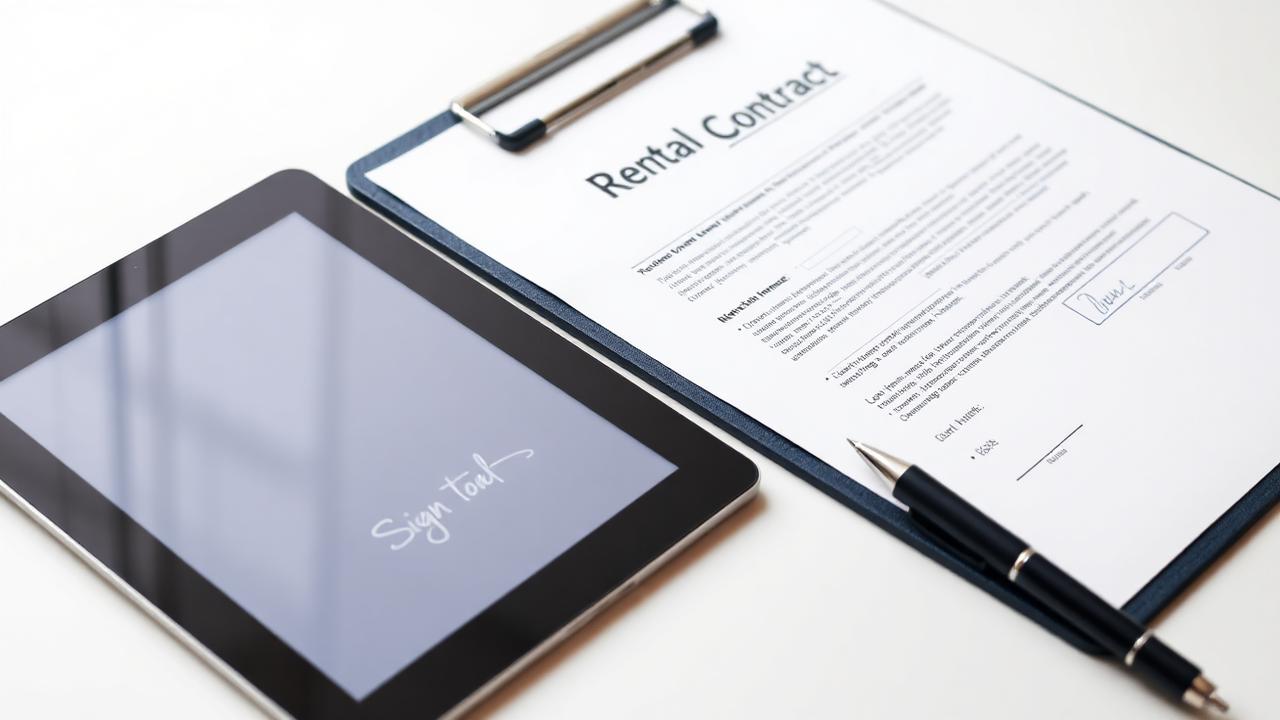
Contracts and waivers aren't just legal documents, they're business tools that prevent misunderstandings, protect you from liability, and set clear expectations with every customer. Every rental, no matter how small, should have a signed agreement.
Two Documents You Need
1. Rental Agreement (Contract)
The rental agreement covers the business terms of the rental: what's being rented, when, where, how much, and what happens if things go wrong. This is a legally binding contract between you and your customer.
- Rental details: Equipment name/description, rental date, start time, end time, delivery address.
- Pricing: Total rental fee, deposit amount, delivery fee, extended hour rates, taxes.
- Payment terms: When payment is due, accepted methods, deposit policy, balance due date.
- Cancellation policy: How far in advance they must cancel for a full refund (typically 48 to 72 hours). Late cancellation fee (usually loss of deposit).
- Weather policy: Your right to cancel or delay in wind/storms. Reschedule vs. refund terms.
- Damage policy: Customer liability for damage beyond normal wear. Replacement costs for major damage. Define 'normal wear' vs. negligence.
- Setup requirements: Customer's responsibility to provide a level surface, clear area, and power access. Your right to refuse setup if conditions are unsafe.
- Supervision: Customer must provide adult supervision at all times while equipment is in use. Define age limits, capacity limits, and prohibited activities.
- Indemnification: Customer agrees to hold you harmless for injuries resulting from misuse or failure to supervise.
2. Liability Waiver (Release of Liability)
The liability waiver is signed by the person responsible for the event (and ideally by parents of participating children). It acknowledges the inherent risks of inflatable equipment and releases you from liability for injuries that occur during normal use.
- Assumption of risk: The signer acknowledges that inflatable activities carry inherent risks (falls, collisions, etc.).
- Release of liability: The signer agrees not to sue you for injuries that occur during normal use of the equipment.
- Medical authorization: Permission to seek emergency medical treatment if needed.
- Photo/video release: Permission to use event photos for marketing purposes (optional but valuable).
- Signature line for the responsible adult plus a line for parent/guardian of minor participants.
Important: Liability waivers are not bulletproof. Their enforceability varies by state, and they generally don't protect you from gross negligence (e.g., setting up in dangerous conditions). Waivers are a strong deterrent against frivolous lawsuits, but they're not a substitute for proper insurance and safe practices.
Key Clauses Every Contract Should Have
- Force majeure: Neither party is liable for cancellations due to acts of God, extreme weather, or government orders.
- Equipment rules: No shoes, no sharp objects, no food/drinks on inflatables. Age and weight limits posted and enforced by the customer.
- Access requirements: Customer must provide clear vehicular access for delivery/pickup. Additional charges if equipment must be carried more than 50 feet from the vehicle.
- Power requirements: Blower must remain connected to power at all times. If power is disconnected, all users must immediately exit.
- Early termination: Your right to remove equipment if safety rules are being violated.
- Late return: Charges for keeping equipment past the agreed pickup time ($25 to $50/hour is standard).
How to Get Customers to Sign
- Digital is king. Use your booking software's built-in contract/waiver feature. IO and ERS both include digital signature capabilities.
- Send the contract with the booking confirmation email. Require signature before confirming the reservation.
- For walk-up events (festivals, carnivals), have a tablet at the entrance for parents to sign waivers before children enter.
- Keep signed contracts on file for at least 3 years (check your state's statute of limitations for personal injury, usually 2 to 3 years).
- If a customer refuses to sign, don't set up the equipment. No exceptions. The liability risk isn't worth any single rental fee.
Getting Professional Legal Help
While booking software provides contract templates, we strongly recommend having a local attorney review your rental agreement and waiver. Laws vary by state, and a $200 to $500 attorney review ensures your documents are enforceable in your jurisdiction.
Look for an attorney who specializes in small business or entertainment/event law. Ask them specifically about waiver enforceability for amusement activities in your state. This is a one-time investment that protects you for years.