
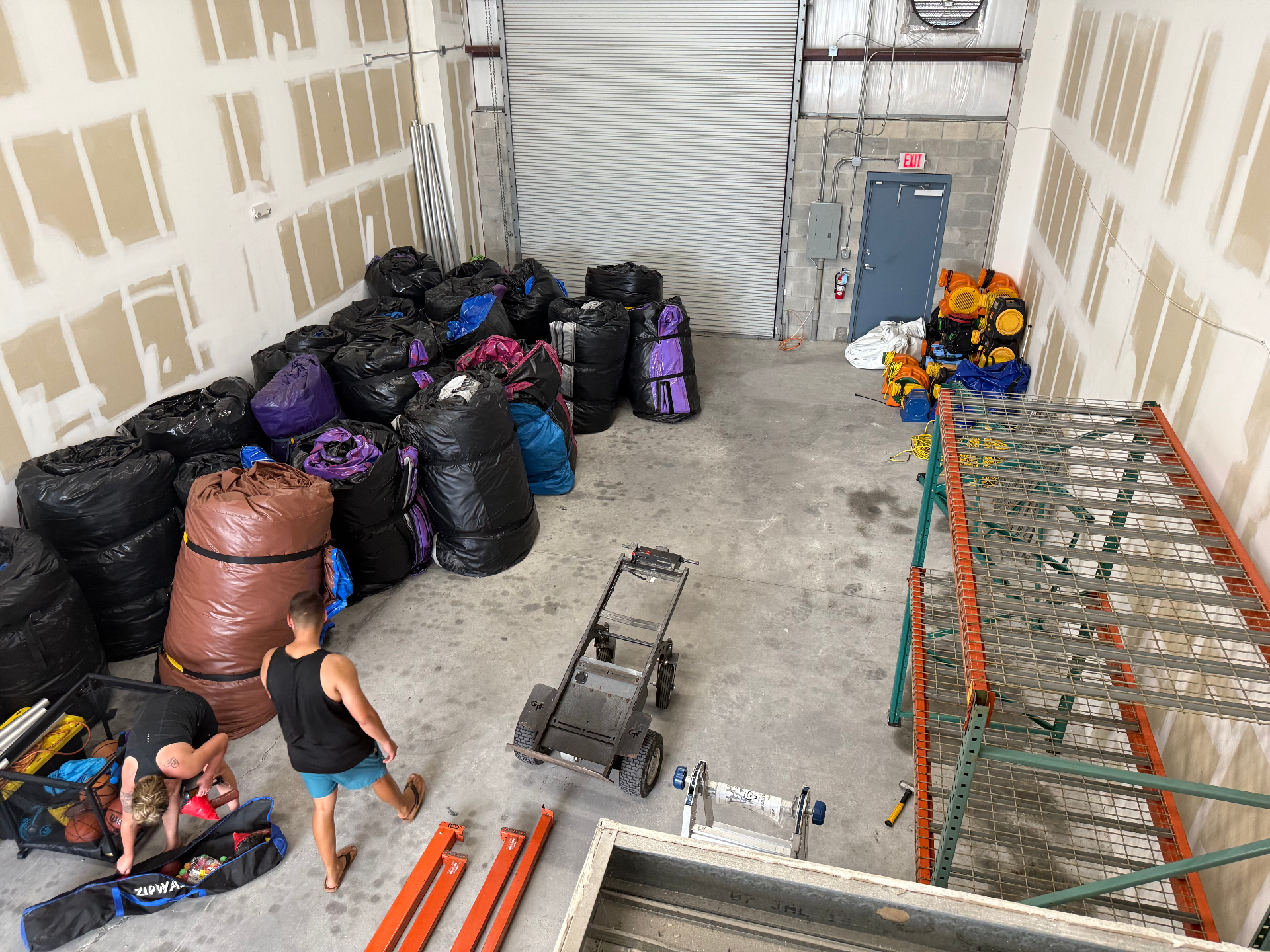
I started in a single car garage with a folded castle, two blowers, and a stack of stakes. Six months in, my wife could no longer park inside. Eighteen months in, I was renting a 10x20 storage unit and driving across town twice a day. Three years in, I signed a lease on a small warehouse and finally felt like a real business. Each upgrade made sense at the time and each one cost more than I expected.
Stage 1: Garage storage (1 to 6 inflatables)
- Cost: $0 in additional rent, but you give up a parking spot and your wife stops being patient.
- Best for: operators with 1 to 6 inflatables, a 2 car garage, and a tolerant family.
- Pros: free, accessible, climate controlled (mostly), zero commute.
- Cons: takes over a household space, humidity from cars and water heaters, hard to organize once you have more than 4 units.
- Setup tips: industrial pallet racks ($300 to $600 from Uline), heavy duty hooks for hoses and cords, dehumidifier ($150) to fight moisture.
Stage 2: Storage unit (6 to 15 inflatables)
- Cost: $80 to $250 a month for a 10x15 or 10x20 unit. Climate controlled units cost 30 to 50 percent more, worth it in humid climates.
- Best for: operators with 6 to 15 inflatables who have outgrown the garage but cannot justify warehouse rent.
- Pros: dedicated space, predictable cost, separates business from home life.
- Cons: drive time both ways, no electricity in most units (cannot inflate to inspect), limited access hours at some facilities.
- Setup tips: pick a 24 hour access facility, get climate controlled if you are in a humid state (Florida, Gulf Coast, Carolinas), use stackable pallets to maximize vertical space.
Run the math before you sign a storage unit lease. At $200/month you are paying $2,400 a year. That is the cost of two new inflatables. Make sure the unit is genuinely needed before you commit.
Stage 3: Warehouse or shop space (15+ inflatables)
- Cost: $600 to $1,800 a month for 800 to 1,500 square feet of light industrial space. Triple net lease means you also pay taxes, insurance, and maintenance.
- Best for: operators with 15+ inflatables, multiple trucks, and ideally an employee or two.
- Pros: power and water for inflate testing and cleaning, room to grow, professional address for commercial clients, garage door for easy load and unload.
- Cons: real lease commitment (1 to 3 years), utilities, business insurance bumps up, drive time still applies.
- Setup tips: roll up door minimum 10 feet wide, ceiling at least 12 feet for vertical pallet storage, dedicated wash area with floor drain, separate office space for booking work.
True monthly cost comparison
| Storage type | Monthly cost | Effective cost per inflatable | When to upgrade |
|---|---|---|---|
| Garage | $0 | $0 | When you have 6+ units or your spouse stops being polite about it. |
| Storage unit (10x20 climate) | $200 | $13 to $20 | When you have 15+ units or you need power on site. |
| Warehouse (1,000 sq ft) | $1,200 | $60 to $80 (drops as fleet grows) | When you have 25+ units, multiple trucks, or full time staff. |
| Warehouse (2,500 sq ft) | $2,800 | $56 to $70 (with 40+ units) | When you have 40+ units and need office, retail, or event space. |
Storage rules that double inflatable life
- Never store inflatables wet or damp. Mildew is permanent and ruins resale value. Always dry inflate for 30 to 60 minutes after a wet event before folding.
- Fold consistently. Same fold pattern every time so you know what is in each pallet without unfolding.
- Label every bag with the unit name, dimensions, weight, and last service date. Saves loading time and prevents the wrong unit going to the wrong job.
- Keep blowers and accessories with their parent unit. Lost blowers and missing stakes are the second leading cause of late deliveries.
- Maintain humidity below 60 percent. Above that, vinyl plasticizers leach out and the unit gets brittle.
- Avoid storing under direct sunlight or near heat sources. UV exposure shortens vinyl life by 50 percent.
- Do a full inventory every 3 months. Catches missing parts before they cost you a booking.
When to invest in a real warehouse
A warehouse only makes financial sense once you can absorb $15,000 to $30,000 a year in lease and utilities. That usually requires $250,000+ in revenue. Below that, you are better off running 2 storage units and a home office. The fancy warehouse is a status purchase, not a business decision, until your fleet truly demands it.
Bottom line
Stay in the garage as long as your family will let you. Move to a storage unit when you have 6+ units and need separation. Sign a warehouse lease only when revenue justifies it. Each stage has clear triggers, jumping ahead because it feels more legitimate is the fastest way to wreck your margins.