
The first time a blower died on me was a Sunday afternoon party with twenty kids on the inflatable. The motor coughed, smoked, and quit. The kids cried. The dad wanted his money back. I drove home, picked up my backup blower, drove back, and saved about half the gig. That night I started learning everything about how blowers work and how to keep them alive. Five years later I have not had a blower fail mid event since.
How a blower actually works
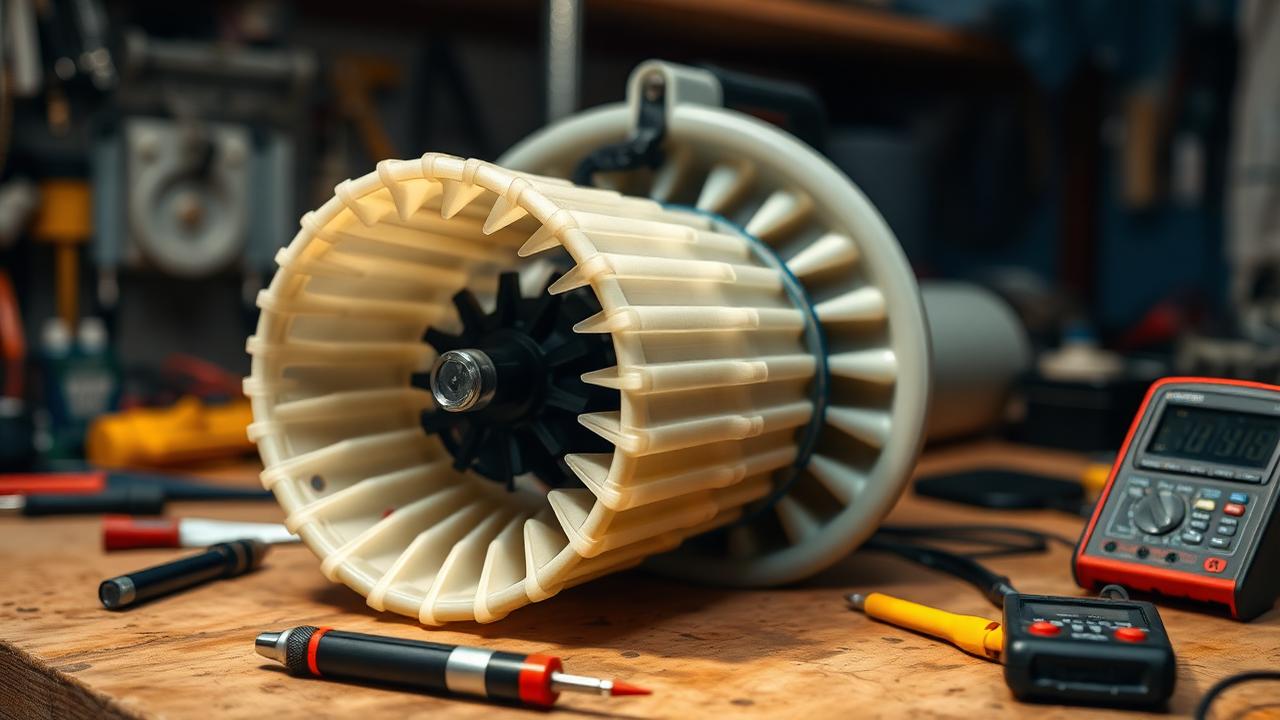
A commercial inflatable blower is a centrifugal fan driven by an electric motor. The motor spins an impeller (the curved fan blade), which forces air through a snout into your inflatable. The whole thing is held together by a plastic or metal housing. Failures almost always come from one of four places: the motor windings, the bearings, the impeller, or the power cord. Knowing this lets you diagnose 90 percent of problems in under five minutes.
Daily and weekly maintenance
- After every event: wipe down the housing with a damp cloth. Visual check for cracks or chipped vents.
- Check the power cord for cuts, frays, or exposed copper. Most cord failures happen at the strain relief where the cord enters the housing.
- Listen to the blower while it runs. A healthy blower has a steady, even hum. Any whining, grinding, or rattling means trouble brewing.
- Once a month: open the intake screen and clear out grass, leaves, and debris. Restricted airflow burns up motors fast.
- Every 3 months: spray a tiny amount of motor specific oil on the bearings (most operators use 3 in 1 oil or sewing machine oil).
The 5 most common blower failures and fixes
1. Blower runs but inflatable does not stay inflated
Almost always a worn or damaged impeller. Open the housing, check the impeller for cracks or chunks missing. Replacement impellers run $40 to $90 and take about 20 minutes to swap. If the impeller is fine, check the snout for tears or holes letting air escape before reaching the inflatable.
2. Blower trips the breaker or generator immediately
Could be a shorted motor winding (replace the blower) or an overload caused by a stuck impeller (free it up and try again). Test by plugging into a different outlet first. If it still trips, plug in a known good blower to confirm the issue is the unit and not the power source.
3. Blower hums but does not spin
Capacitor failure is the usual culprit. Most commercial blowers have a starting capacitor that gives the motor its kick. Capacitors fail after 3 to 5 years. Replacement capacitor costs $15 to $30 and takes 15 minutes with a screwdriver. Always discharge the old capacitor before handling, they hold a charge that will give you a healthy zap.
4. Loud grinding or screeching noise
Bearing failure. Bearings can sometimes be replaced ($20 to $40 in parts) but it is a teardown job that takes 1 to 2 hours and requires a bearing puller. For most operators, a grinding blower means it is time for a new one. The good news: a unit with bad bearings still has a good motor, capacitor, and cord that you can salvage as spares.
5. Power cord stops working
Easiest fix on the list. Most cord failures happen at the strain relief or at the plug. Cut the bad section, splice in a replacement section with marine grade waterproof connectors, and you are back in business. New replacement cords cost $15 to $30 and take about 30 minutes to install with basic wiring tools.
Always unplug the blower before opening the housing. Capacitors hold a charge for several minutes after disconnection. Discharge them with an insulated screwdriver across the terminals before you touch anything.
When to repair vs replace
| Problem | Repair cost | Replace cost | Recommendation |
|---|---|---|---|
| Capacitor failure | $20 | $180 to $250 | Always repair. |
| Impeller crack | $60 | $180 to $250 | Repair if motor is under 4 years old. |
| Power cord | $25 | $180 to $250 | Always repair. |
| Bearing failure | $80 plus 2 hours of labor | $180 to $250 | Replace unless you enjoy the work. |
| Burned motor windings | Not realistic | $180 to $250 | Replace. |
| Cracked housing | Not realistic | $180 to $250 | Replace if structural, otherwise duct tape and keep going. |
Brands worth buying (and brands to avoid)
- Buy: B Air Koala, Cyclone, and Tornado series. American made or American spec, parts available, motors hold up for 5+ years of weekly use.
- Buy: XPower BR Pro series. Lighter weight, quieter, parts available through any inflatable distributor.
- Buy: Lookin Right and Pure Air commercial 1.5 HP units. Solid mid range price, decent longevity.
- Avoid: Generic Amazon blowers under $100. The motors are rebadged HVAC fan motors with no parts support. They burn out in 6 to 12 months of weekly use.
- Avoid: Cheap eBay imports. Often missing UL certification, which voids most insurance policies.
Build a repair kit for your truck
- Spare blower (always carry one). The single most important piece of backup gear in your operation.
- Replacement capacitors for your most common blower models (3 to 5 spare).
- Replacement impeller (1 to 2 of each size you run).
- Marine grade waterproof wire connectors and 50 ft of 14 gauge replacement cord.
- Multimeter (a $20 unit from Harbor Freight is fine).
- Insulated screwdriver set.
- Spare extension cords (12 gauge, 50 ft and 100 ft).
Storage tips that double blower life
- Always store blowers indoors and dry. Humidity destroys bearings and corrodes electrical contacts.
- Coil the cord loosely. Tight wraps stress the strain relief and crack the insulation over time.
- Stand blowers upright on the intake screen. Storing them on their side puts weight on the impeller shaft and warps it.
- Cover the intake during storage to keep mice and bugs out. A simple plastic bag works.
- Test fire every blower at the start of every season before your first event. Find failures in your driveway, not at a customer's house.
Bottom line
Blowers are the most important piece of equipment in your fleet and the cheapest to maintain. Keep a spare in the truck, learn to swap a capacitor and a power cord, and you will save hundreds of dollars a year and never lose another event to a dead motor in the middle of a kid's birthday party.